


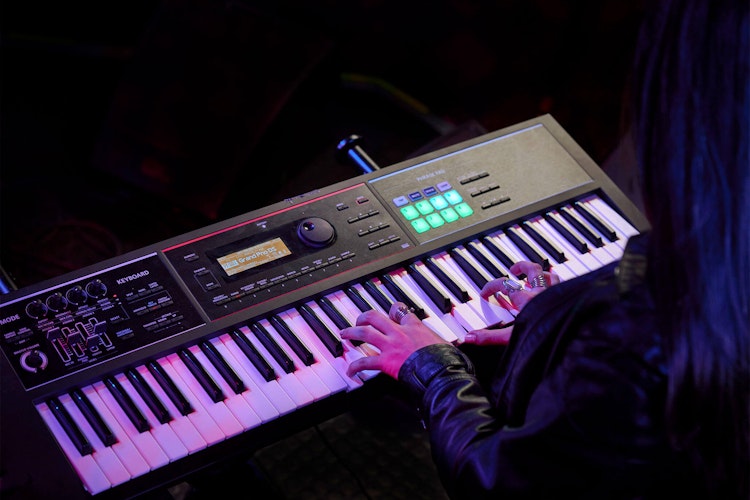
- Identical Layouts: The arrangement of the keys is exactly the same, making it completely possible to learn and play piano on a keyboard.
- Cost & Space Efficient: Practicing piano on a keyboard is highly recommended for beginners because keyboards are more affordable, portable, and take up less space.
- Look for Weighted Keys: To build proper finger strength and easily transition to an acoustic piano later, look for a digital keyboard with "weighted action."
- Essential Features: Make sure you choose a keyboard with at least 72 keys and a sustain pedal if your goal is to truly replicate the traditional piano experience.
A common question many students and parents ask School of Rock is “What is the difference between piano and keyboard?” and “Can you learn piano on a keyboard?” While there are differences in the sounds these instruments produce and how they make them, the answer is “yes!”—it is possible to learn to play piano on a keyboard.
At School of Rock, our keyboard instructors teach students how to play piano on a keyboard with confidence and inspire them to get up on stage and play in a band with their peers in front of a live audience.
How Do You Decide Between a Piano vs. a Keyboard?
Since the two instruments share many similarities, the concepts you learn and practice on a piano will transfer directly to playing on a keyboard. In fact, taking piano lessons is one of the most accessible ways to start your musical journey. However, there are subtle differences between the two instruments that are worth noting when figuring out how to best play piano on a keyboard.
Action
The “action” of a keyboard or piano describes how well the keys respond when pushed down. As an acoustic instrument, pianos tend to have more action and have a weighted feel when playing. A keyboard with weighted keys is a good option for students who want a similar feel to the piano. The latter option is a great choice when a student wishes to learn piano on a keyboard. Consistently practicing piano on a keyboard with weighted keys will help build necessary finger strength.
Key arrangement
The arrangement of the keys on a keyboard piano is identical to the arrangement of the keys on a classical piano, and your hand and finger movements will be identical from one instrument to the other. Pianos all use the same width keys, and many keyboard keys are identical or slightly narrower in width. This slight change in width won’t take too much getting used to if you’re going to switch back and forth from one size of keys to another.
Range
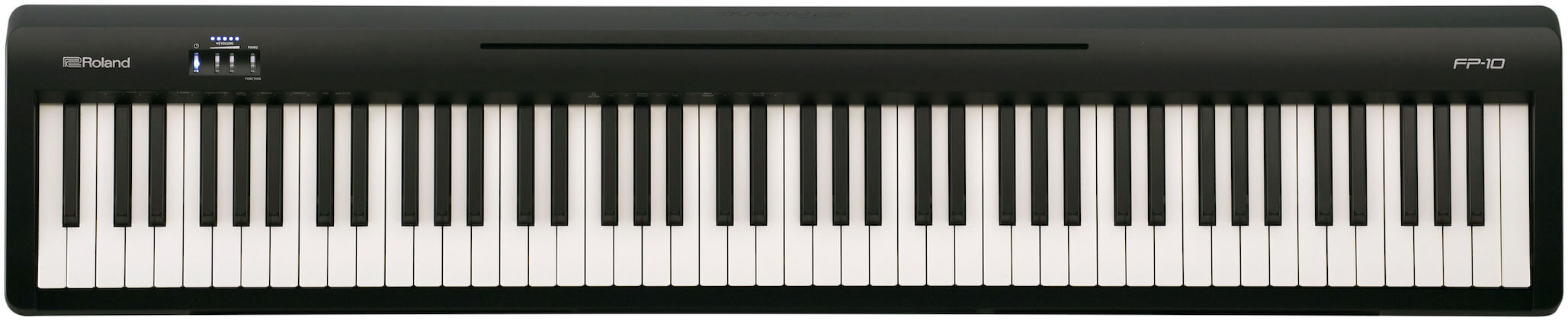
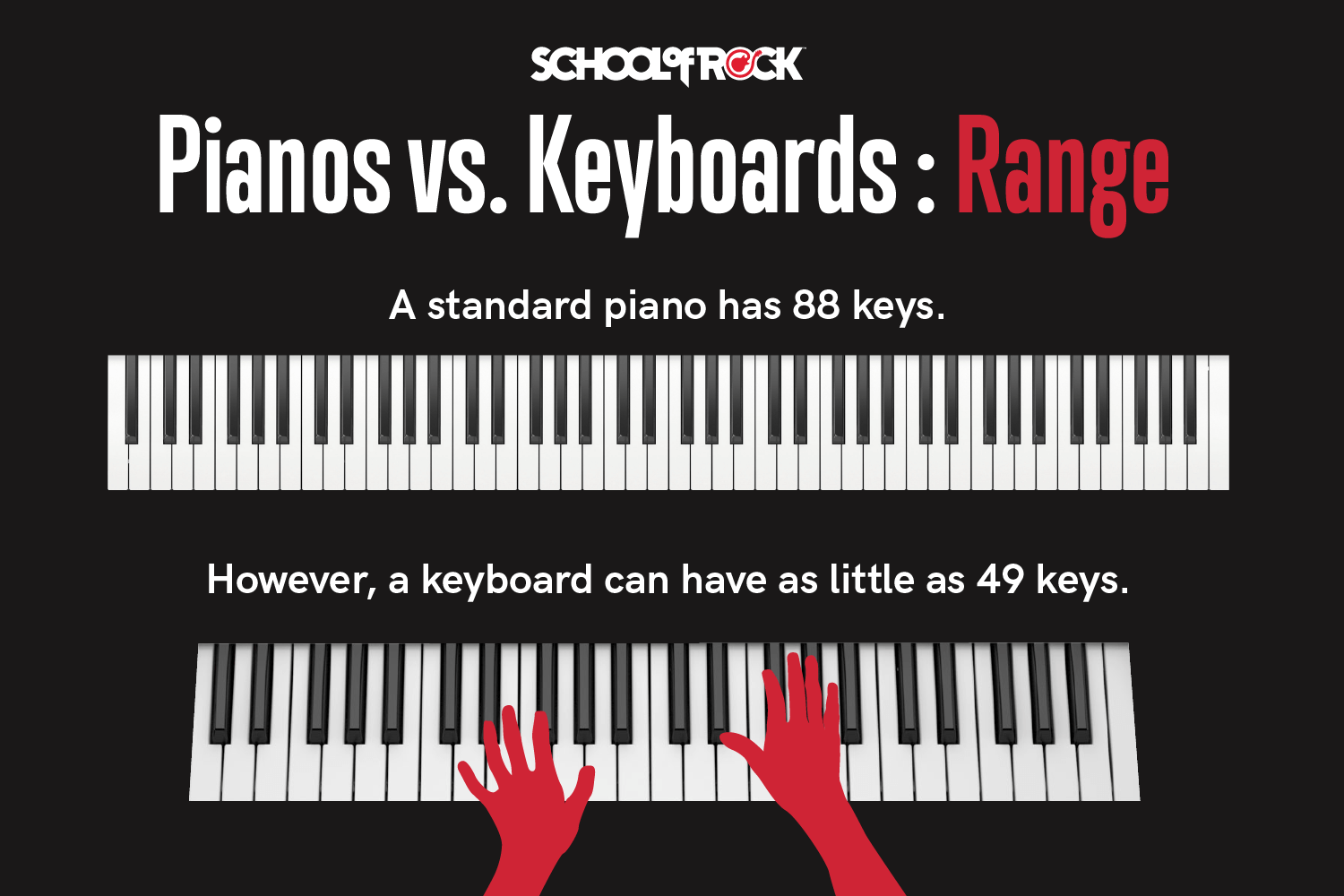
The standard classic piano has 88 keys, as do many electric keyboards. However, some piano keyboards have fewer than 88 keys. The number of keys differs depending on the model you choose for your child, but if you want to learn piano on a keyboard, you’ll need at least 72 keys to play the majority of popular piano compositions.
Cost
In general, keyboards tend to be more affordable than pianos. The cost of a piano may be high depending on the manufacturer, the material, and the design, but you can find pianos being sold second-hand for relatively less. For piano keyboards, you can usually purchase a model for less than a hundred dollars, but some models may cost more depending on the features. For this reason, some parents may want to consider renting a piano or keyboard until their child is certain they want to commit to practicing piano on a keyboard.
Sound
Sound options vary depending on whether you choose a piano vs. a keyboard. The piano is an acoustic instrument, meaning its sound is produced and amplified physically. In comparison, keyboards are electronic instruments with a variety of volume options and often can produce sounds like piano, horns, strings, organs, synthesizers, and more. Since they’re electronic, they often require amplification to produce sound, although some models come with built-in speakers. Unlike pianos, keyboards can be made loud or quiet by using their volume knob which is great for practicing piano songs late at night.
Size and portability
Pianos tend to be large and are designed to stay in place most of the time. Due to their size, they often need to be moved by teams of professionals. In contrast, many keyboards are very light and portable, making them ideal for those who wish to learn piano on a keyboard. Due to their smaller size, keyboards tend to be easier to move and can be put away as needed and are great for traveling musicians who need to bring their instruments with them wherever they perform.
Maintenance
In general, it’s important to keep your piano or keyboard in good condition by cleaning the instrument regularly. In addition to regular maintenance, pianos also need to be kept in tune. As an acoustic instrument made of wood and metal, pianos can fall out of tune due to environmental factors like temperature, humidity, or seasonal changes. In general, it is recommended that piano owners regularly tune their pianos with the help of a professional, which can add up in cost. This is an important factor to consider when researching piano vs. keyboard benefits.
Where to buy
Both pianos and keyboards can usually be purchased online or at your local music store. Because of their large size and weight, pianos often need to be moved by professionals for a fee. Since they’re smaller and lighter, keyboards tend to be less expensive to ship or can be carried out of the store without the need of a professional team. Depending on where they shop, parents also have the option of renting their instruments before they commit.
Play the keyboard in real performances
Our music programs are taught by practicing musicians with the experience students need to learn to play piano on the keyboard. Students can perform live shows and develop their skills in a supportive learning environment for all skill levels.
Learn to play
WHAT IS THE DIFFERENCE BETWEEN A DIGITAL PIANO VS. A PORTABLE KEYBOARD?
Like a traditional piano, digital pianos are designed to stay in one place in the home and rarely move. Many are also designed with fixed stands or enclosures that mimic the appearance of a piano.
Meanwhile, most portable keyboards are designed with the performing musician in mind and are relatively easy to unplug and move from place to place. If you’re thinking of playing the keyboard with a group and are planning to bring your own instrument to rehearsals and performances, this might be the best option for you.
HOW SHOULD YOU CHOOSE BETWEEN A PIANO, DIGITAL PIANO, OR KEYBOARD?
Deciding between a piano, digital piano, or electric keyboard depends on how you plan to use the instrument, and there are quality options for each kind of instrument at a range of price points.
When choosing an instrument, consider these three questions:
- How often do you plan to move it?
- What kind or kinds of music do you want to play?
- Do you need a great variety of sounds?
By asking these questions, you’ll be able to make a well-informed decision about which instrument is the best fit for you.
Where to go from here
Do you want to learn piano on a keyboard but are not sure where to start? Visit our Keyboard Buying Guide for tips on how to choose the perfect keyboard. School of Rock offers beginning musicians the advice they need for choosing the best sound, action, size, brand, and technological features to get playing and on stage.
FREQUENTLY ASKED QUESTIONS
CAN YOU LEARN PIANO ON A KEYBOARD?
Yes, learning piano on a keyboard is possible. The layout of the keys is identical on both instruments. The songs you learn to play on a piano will transfer directly to a keyboard, and vice versa, with little adjustment needed for small differences in the width of the keys or the amount of pressure needed to play them.
CAN I TAKE PIANO LESSONS IF I ONLY HAVE A KEYBOARD AT HOME?
Absolutely! Many students successfully begin their musical journey by practicing piano on a keyboard. As long as your instrument has full-sized keys, it is a fantastic, space-saving tool for completing your weekly lessons and practicing at home.
DO A PIANO AND A KEYBOARD SOUND THE SAME?
While many digital keyboards accurately replicate the sound of a traditional acoustic piano, they also offer a huge variety of other sounds like organs, strings, and synthesizers. However, because acoustic pianos produce physical vibrations that are difficult for standard keyboard speakers to perfectly match, there is a slight difference in how the instrument feels. Despite this, modern electronics sound incredibly realistic and are more than adequate for students deciding to play piano on a keyboard.
IS LEARNING TO PLAY PIANO ON A KEYBOARD DISCOURAGING FOR STUDENTS?
Some parents are concerned that those who learn to play piano on a keyboard may be discouraged, especially if they select a keyboard with fewer than 88 keys. While keyboards with 88 are available in many stores, many students don’t need a full-size keyboard to learn to play.
Practicing piano on a keyboard is incredibly rewarding as long as you look for a model that matches the unique goals of your child and inspires them to learn.
IS THERE A KEYBOARD THAT IS LIKE A PIANO?
If you’re still wondering if you can learn piano on a keyboard, there are piano keyboards that are designed to be as similar to an acoustic piano as possible. These keyboards are called digital pianos, and the feel and sound of playing these instruments are very similar to that of an acoustic piano, making practicing piano on a keyboard feel highly realistic.